Livraison offerte à partir de 45 $ au QC/ON   •  à partir de 60 $ au Canada   •   livraison au Canada & USA   •   
Le Petit Roast est en pause. Les commandes reprennent le 7 Juin

Coffee beans

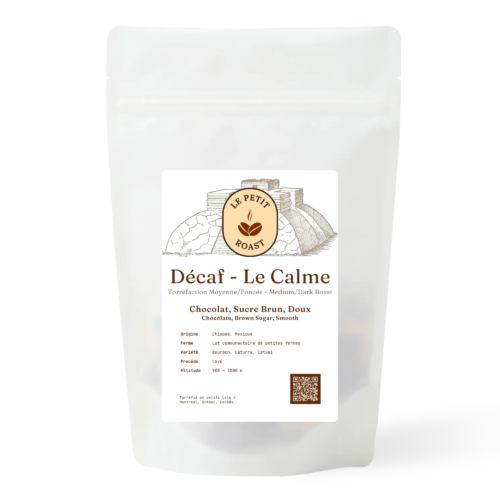
  • Sac de café Décaf Le Calme par Le Petit Roast – décaféiné mexicain torréfaction moyenne-foncée aux notes de chocolat sur fond sable chaud
    Choix des options Ce produit a plusieurs variations. Les options peuvent être choisies sur la page du produit / Détails Afficher

    Décaf Le Calme – Mexique

    Plage de prix : $22.00 à $59.00

    Pour les Curieux.

    Tout ce qu'il y a derrière la tasse.

    Les grains
    Origine
    Mexique
    Région
    Chiapas
    Source
    Lot communautaire
    Altitude
    900–1 800 m
    Variété
    Bourbon, Caturra, Catuai
    Procédé
    Lavé, décaf Canne à sucre
    Guide d'infusion

    Le Calme works with everything. Espresso, drip, French press, pour-over — no method loses. It's your evening cup, your second pot of the day, or your all-day coffee if you're cutting back on caffeine. It behaves closer to a regular coffee than any decaf you've tried. In milk drinks, it holds its character the same way our caffeinated roasts do. No compromise, just coffee without the jitters.

    Approche de torréfaction

    Medium-dark, leaning into the sweetness. Decaf beans roast differently. The Sugar Cane process makes them more porous, so they absorb heat faster and the cracks are harder to read. We slow the roast down to compensate, giving it an even development that regular speed would miss. The goal is to bring out the chocolate and brown sugar that Chiapas is known for, while keeping enough structure that the cup doesn't fall flat.

    Décaf Canne à Sucre
    99.9%
    sans caféine
    aucun produit chimique, aucun compromis

    Most decaf uses industrial solvents that strip flavor along with caffeine. Le Calme is decaffeinated using ethyl acetate naturally derived from fermented sugarcane — no chemicals added. The green beans are steamed to open their pores, the caffeine is gently dissolved out, and the beans are dried back down. The caffeine is gone. The coffee stays.
  • Sac de café Décaf Red Plum par Le Petit Roast – décaféiné colombien torréfaction légère-moyenne aux notes de prune et baies rouges sur fond bourgogne
    Choix des options Ce produit a plusieurs variations. Les options peuvent être choisies sur la page du produit / Détails Afficher

    Pour les Curieux.

    Tout ce qu'il y a derrière la tasse.

    Les grains
    Origine
    Colombie
    Région
    Piendamó, Cauca
    Producteur
    Diego Bermúdez, Finca El Paraíso
    Source
    Micro-lot de ferme unique
    Altitude
    1 960 m
    Variété
    Castillo
    Procédé
    Double fermentation anaérobie lavé (avec pulpe), choc thermique, décaféiné canne à sucre
    Guide d'infusion

    Red Plum is built for filter brewing. Pour-over, V60, Chemex, AeroPress, batch brew — all of them let the plum and red berries come through clearly, with a clean acidity and milk chocolate sitting subtle in the background. Surprising, delicious, and the last coffee you'd guess is decaf.

    Before roasting, the beans go through a double anaerobic fermentation with the cherry pulp still on, using the Bermúdez family's custom Paraíso Red Fruit culture. Then a thermal shock wash (hot and cold water to lock in the aromatics), followed by dehumidified drying to stabilize the cup. Only then are they decaffeinated using the Sugar Cane process — ethyl acetate from sugar cane dissolves the caffeine while keeping the sweetness intact. If you've never had decaf that made you forget it was decaf, start here.

    Approche de torréfaction

    Light-medium roast, with precision. Red Plum comes from Finca El Paraíso, one of the most respected farms in specialty coffee. The Bermúdez family built the plum and berry character into the bean through their fermentation and thermal shock process before it ever reaches us. With all that complexity already there, the roast stays gentle — just enough development to open up the fruit, while the chocolate stays subtle in the background. Roasting darker would erase exactly what they spent weeks building in.

    Score SCA
    89 / 100
    décaf exceptionnel
    0 Specialty · 80 100

    The SCA score is the global standard for grading coffee quality. Certified Q-graders cup each lot on aroma, flavor, body, acidity, and balance. Commercial coffee typically scores 60–70. Specialty grade starts at 80, with 85+ considered exceptional. Red Plum scored 89 — exceptionally high for a decaf. Most decaffeinated coffees lose flavor in the process. This one didn't.

  • Sac de café Le Fort par Le Petit Roast – torréfaction foncée colombienne aux notes de cacao et mélasse sur fond brun chocolat
    Choix des options Ce produit a plusieurs variations. Les options peuvent être choisies sur la page du produit / Détails Afficher

    Le Fort – Colombie

    Plage de prix : $21.00 à $57.00

    Pour les Curieux.

    Tout ce qu'il y a derrière la tasse.

    Les grains
    Origine
    Colombie
    Région
    Huila
    Source
    Mélange régional
    Altitude
    1,500–1,800 m
    Variété
    Castillo, Colombia, Caturra
    Procédé
    Lavé, séché au soleil
    Guide d'infusion

    Le Fort is built for strong drinks. Espresso first — this is where it sings, pulling thick and rich with cocoa up front, molasses behind, and a finish that holds its ground with milk. Moka pot, French press, anywhere you want body and backbone. It also brews clean as filter if that's your thing, just know you're leaving some of what it's for on the table. This is dark roast done right: intense without being burnt, rich without being heavy. If you came up on dark roast and wondered what "better coffee" might taste like, start here.

    Approche de torréfaction

    Dark, with restraint. "Dark roast" means different things to different roasters. For most commercial coffee, it means pushing past the bean's character until everything tastes the same — charred, bitter, one-dimensional. We take the roast deep, but pull it before that line. The goal is to keep the cocoa and molasses the Huila region is known for while building the body and boldness a dark roast should have. Deep color, full sweetness, no burnt edges. The cup should taste like dark-roast coffee, not like charcoal.

    Score SCA
    84 / 100
    café de spécialité
    0 Specialty · 80 100

    The SCA score is the global standard for grading coffee quality. Certified Q-graders cup each lot and rate it on aroma, flavor, body, acidity, and balance. Commercial coffee typically scores 60–70. Specialty grade starts at 80. Le Fort scored 84 — a clean, well-balanced cup. Dark roast done without cutting corners.

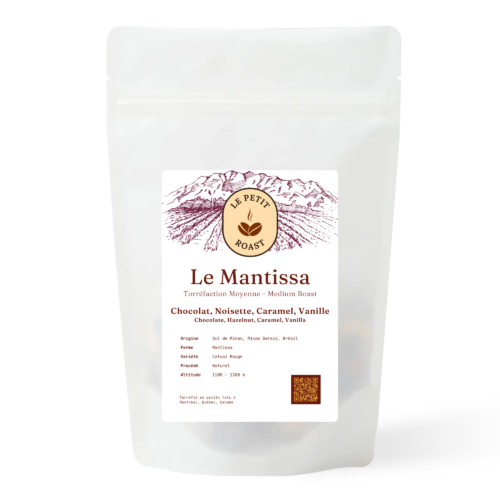
  • Sac de café Le Mantissa par Le Petit Roast – torréfaction moyenne brésilienne aux notes de caramel et noisette sur fond ambré
    Choix des options Ce produit a plusieurs variations. Les options peuvent être choisies sur la page du produit / Détails Afficher

    Le Mantissa – Brésil

    Plage de prix : $20.00 à $54.00

    Pour les Curieux.

    Tout ce qu'il y a derrière la tasse.

    Les grains
    Origine
    Brésil
    Région
    Sul de Minas, Minas Gerais
    Ferme
    Fazenda Mantissa
    Source
    Origine unique
    Altitude
    1 100–1 280 m
    Variété
    Catuai Rouge
    Procédé
    Naturel
    Guide d'infusion

    Mantissa is your all-day, any-method coffee. Espresso, filter, whatever you reach for. The aroma comes first — chocolate and hazelnut — then opens up on the palate with caramel and a quiet vanilla finish. A sweetness that stays without becoming heavy. In milk drinks, it's a natural fit: the caramel deepens, the body rounds out, and nothing gets lost. This medium roast Brazilian natural is the kind of coffee that works without making you think about it. Easy to brew, hard to get wrong.

    Approche de torréfaction

    Medium, slow, and patient. Natural processed beans dry inside the fruit, which means they keep more of its sugar. More sugar means they brown faster and burn easier — so we drop the temperature and stretch the roast, giving the sugars time to caramelize evenly without scorching. The result is a clean sweetness with no roasty edge. With a coffee from an Ernesto Illy Award-winning farm, the raw material is already exceptional. Our job is to let the farm speak.

    Score SCA
    83 / 100
    café de spécialité
    0 Specialty · 80 100

    The SCA score is the global standard for grading coffee quality. Certified Q-graders cup each lot and rate it on aroma, flavor, body, acidity, and balance. Commercial coffee typically scores 60–70. Specialty grade starts at 80. Mantissa scored 83 — a clean, well-balanced cup with no defects.

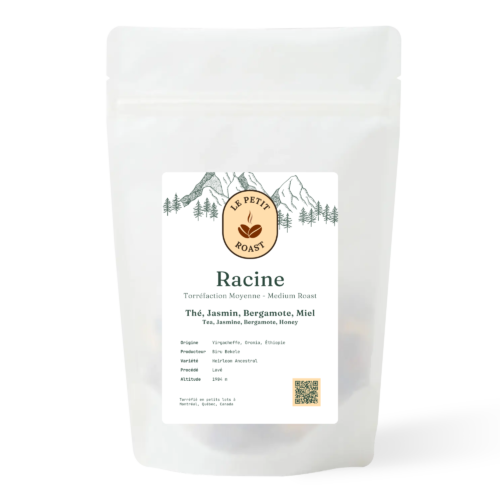
  • Sac de café Racine par Le Petit Roast – torréfaction moyenne éthiopienne Yirgacheffe aux notes de thé et florales sur fond vert forêt
    Choix des options Ce produit a plusieurs variations. Les options peuvent être choisies sur la page du produit / Détails Afficher

    Racine - Éthiopie

    Plage de prix : $23.00 à $62.00

    Pour les Curieux.

    Tout ce qu'il y a derrière la tasse.

    Les grains
    Origine
    Éthiopie
    Région
    Yirgacheffe
    Producteur
    Biru Bekele
    Source
    Origine unique
    Altitude
    1 904 m
    Variété
    Heirloom
    Procédé
    Lavé
    Guide d'infusion

    Racine is tea in a coffee cup. The aroma lifts with jasmine, the palate brings bergamot, and a soft honey sweetness ties it together on the finish. Light body, clean finish, no harsh edges. As espresso, it's Earl Grey first — surprising, delicious, and unlike any coffee you've had before. On filter, the cup opens into layers — jasmine, honey, and a long finish that rewards slow sipping. Drink it black; milk would cover what makes it special. A medium roast Ethiopian Yirgacheffe for anyone who wants something refined without being fussy. Easy to brew, easy to love.

    Approche de torréfaction

    Medium roast, with a focus on clarity. Washed Ethiopian beans at 1,904 meters are dense and tightly structured — the altitude gives them a fine grain that resists heat. We apply steady, patient heat to develop sweetness and body without pushing past the florals. Push too far and the jasmine disappears. Pull back too much and it tastes grassy. The window is narrow. Racine lands right in the middle: enough development for the honey to come through, enough restraint to keep the bergamot bright.

    Score SCA
    86 / 100
    café de spécialité
    0 Specialty · 80 100

    The SCA score is the global standard for grading coffee quality. Certified Q-graders cup each lot and rate it on aroma, flavor, body, acidity, and balance. Commercial coffee typically scores 60–70. Specialty grade starts at 80, with 85+ considered exceptional. Racine scored 86 — a clean, complex cup with distinctive floral character.

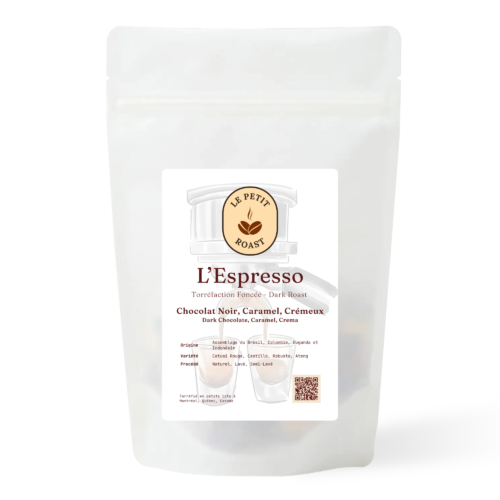
  • Sac de café L'Espresso par Le Petit Roast – assemblage torréfaction foncée aux notes de chocolat noir et caramel sur fond rouge brique foncé
    Choix des options Ce produit a plusieurs variations. Les options peuvent être choisies sur la page du produit / Détails Afficher

    Le Mélange Espresso

    Plage de prix : $20.00 à $54.00

    Pour les Curieux.

    Tout ce qu'il y a derrière la tasse.

    Les grains
    Origines
    Brésil, Colombie, Ouganda, Sumatra
    Composition
    Deux Arabicas, un Robusta, un Sumatra mi-lavé
    Brésilien
    Mantissa — Minas Gerais, natural
    Colombien
    Le Fort — Huila, washed
    Robusta
    Ouganda, cultivé en altitude
    Sumatran
    Caturra, mi-lavé
    Torréfaction
    Foncée
    Idéal pour
    Espresso, boissons au lait, cafetière italienne
    Guide d'infusion

    L'Espresso is your all-day coffee. Four origins, one cup: Brazilian sweetness from Mantissa, Colombian caramel from Le Fort, Ugandan Robusta for a proper crema, Sumatran wet-hulled for body. The cup is balanced — nothing fights, nothing pulls ahead. Chocolate-caramel sweetness up front, a full round body, and a soft crema that holds. Where it really comes alive is in milk drinks — lattes, cortados, cappuccinos, flat whites. The blend is built to hold its shape through steamed milk without going thin. Pull it as espresso or brew it in a moka pot. Either way, it delivers.

    Approche de torréfaction

    Roasting a blend is a different game. Four origins with four different densities, four rates of development, one roaster — and for L'Espresso, one batch. We blend the green beans first, then roast them all together the way classic Italian espresso has always been made. The Brazilian natural wants to run fast. The Colombian washed is slower. The Ugandan Robusta is the hardest of the four. The Sumatran wet-hulled is soft and porous — it came out of the hull wet and roasts differently. The whole batch goes to the edge of second crack. The job isn't to perfect each bean on its own terms. It's to find the one profile where all four meet and the cup tastes like L'Espresso.

    La question du Robusta
    Pourquoi du Robusta ?
    par choix

    Most specialty roasters won't touch Robusta. We use it on purpose. The Ugandan Robusta in this blend comes from the species' native home — Robusta still grows wild in Uganda's rainforests — and it's cultivated at elevation, which puts it in a class most commercial Robusta will never reach. It brings two things no Arabica can: a proper crema and the structural backbone a real espresso needs. Used right and in the right proportion, it doesn't dominate — it holds the blend together. The best Italian espresso blends have always included Robusta. We're not hiding it. It's one of the reasons this blend works.

Aller en haut de la page